

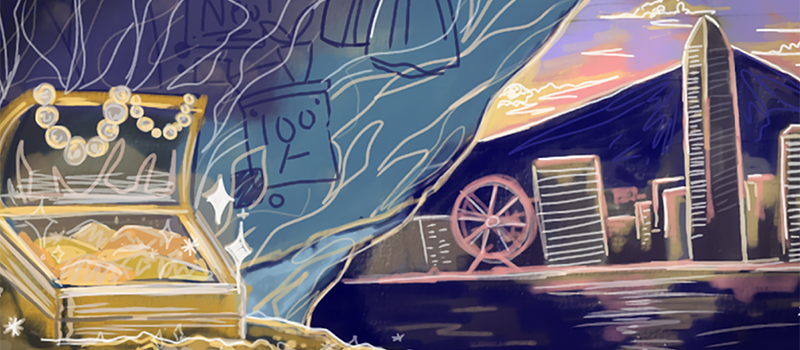
Artwork by Anoushka
Fiona Poon, The Hong Kong Polytechnic University
With the eyes of a detective, Fiona pulls at loose threads to unravel the mystery behind the latest fashion trend.
From Trash to Trend: How Hong Kong’s Thrift Culture is Redefining Fashion
By Fiona Poon
The faint yellow light bathes the shop, illuminating clothes hung from racks in a kaleidoscope of patterns and colours. Wandering through the quiet, orderly space feels like searching for gold and treasure long forgotten in a pirate’s cove. This particular sanctuary is one of the most popular thrift stores in Hong Kong, Mee & Gee. The increasing popularity of shops like this presents a fashion mystery—one I am determined to unravel.
As a fashion student, I’m particularly surprised that this rising trend of thrift style is taking place in Hong Kong, which is known for its fast-paced consumer culture. A local band, N.Y.P.D., even wrote a song about it, “Mee & Gee.” In a city that never stops chasing the next big thing, thrift fashion isn’t just a trend—it’s becoming a quiet rebellion against the culture that made Hong Kong a shopping mecca. It’s time to dig into the mystery behind this hand-me-down insurrection.
The First Clue: You Are What You Wear
My first piece of the fashion puzzle came from the shop owner of Mee & Gee. During our chat, I was surprised to learn that budget-savvy middle-aged ladies no longer dominate the thrift fashion market. He observed that “more and more young people come seeking one-of-a-kind goods. Fashion students, tourists, designers, and stylists are also frequent visitors.”
Could it be that these unique fashion items provide a way for customers to reclaim their individuality?
As a member of both the “young” and “fashion student” demographic, I can confirm that he is not exaggerating the customer range for commercial benefit. I enjoy shopping for second-hand goods because it’s like digging into a fashion oasis that’s surrounded by a grey urban landscape of fast-fashion uniformity. Though thrift is practical for budget-conscious students, finding a shiny artifact you love feels like connecting with a soulmate who sees your true self. That visual sense of self-expression and individuality is far more important than the garment’s price tag.
One of my frequent thrift store shopping partners, Jody Chun, a second-year student of translation at the University of Hong Kong, said, “I feel a sense of uniqueness every time I’m wearing a second-hand piece, even though I am not really any different from others.”
The Second Clue
Another hidden reason for the rise in thrift fashion stems from sustainability. In the past, Hong Kongers appeared less familiar with the sustainability movements around the world since we were accustomed to a capitalist-based consumerist lifestyle. However, the global tide of sustainability is finally washing up on our city’s shores.
“It’s ethical to reduce waste by operating such an eco-platform, changing the public’s perception of thrift fashion,” said Ms Chan, a staff member at Green Ladies.
While 58% of the top US companies are pivoting to green PR, Hong Kong’s shift is happening on the ground, in the aisles of second-hand shops. “In the UK, the US, or other Western countries, there are a lot of regular flea markets, bundle shops, and kilo shops (items priced by weight), which we do not have in Hong Kong. But second-hand stores are filling this gap,” suggests Amy Ng, a first-year student studying fashion and textiles at PolyU. Influencers post pieces they find at thrift shops on social media, spreading the trend and fostering thrift fashion culture.
Ultimately, I believe everyone can appreciate the motivations behind the thrifting culture: it is a “triple win” scenario—not only do the business and customer benefit, but also our environment and society.
The Red Herring
Despite its growing popularity, thrift shopping in Hong Kong still faces misconceptions ranging from superstitions about the origins of clothes to worries about hygiene. Even the popular Mee & Gee has been the target of finger-pointing for allegedly selling clothes from the deceased. It is one thing to go treasure hunting, but grave robbing is quite another story.
When I held up a shirt and asked the shop owner of Mee & Gee, “What if the previous owner… you know… died in this?” he laughed.
“70% of the store’s inventory consists of unsold stock from vintage shops in Japan and Korea, along with end-of-season purchases from Japanese fashion retailers,” said the shop owner.
He explained that with tens of thousands of vintage stores in Japan and Korea—where second-hand clothes are already low-value—there’s simply no need to resort to “dead men’s clothes.” To maintain the standard of the clothes, they don’t even accept donations from customers.
Yet, even as Hong Kong’s thrift scene booms, it battles the side-eye of sceptics: “Isn’t second-hand clothing dirty? Will it spread diseases or viruses?”
Regarding this issue, I assure you that thrift stores sanitize harder than a post-pandemic MTR station. “We wash and clean all the clothes before they appear on the shelves,” said Ms Chan from Green Ladies. Personally, I think it may be more practical for us to consider how dusty fast-fashion sweatshops are before worrying about the cleanliness of thrifted clothes.
Speaking of sanitation, let’s clean up the stereotype that only poor people wear used clothes. For those with this belief, just chat with the Gen Z hypebeast who scores a pristine Y2K Tommy Hilfiger jacket for half price. They will tell you how great it is to shop in a thrift store. After all, in a city where even cha chaan tengs charge $50 for microwaved noodles, who wouldn’t want to look chic on a budget?
The New Gold Standard?
Can thrift stores survive long term in Hong Kong’s ruthless high-rent jungle while challenging the consumerist mindset? Who knows! But one thing is clear: thrift culture represents a quiet revolution, turning the city’s “shop till you drop” motto into “swap till you stop.”
Though the future is unpredictable, the present offers an opportunity—why don’t we start now? Here is a hot tip for thrifting newcomers: true gems hide in the most overlooked corners. And true style is not about the price tag; it’s about taste and environmental responsibility.
Just as the yellow light in Mee & Gee reveals long-buried treasures, Hong Kong’s thrift culture is unearthing new ways to define style and values. So, next time you pass by a thrift store, light up your lantern and step inside—you might just find that the real treasures are not only on the racks, but in the individual stories and values they embody and unleash.

About the Author
Fiona is a first-year student in the School of Fashion and Textiles. When not in class, you can find her playing Guzheng in the SAO Chinese Orchestra, emceeing for ceremonies, joining study tours, and doing internships. Fiona has her eyes set on becoming a “slasher,” customizing fashion products for customers while working in other industries and participating in community engagement activities. And somehow, she still finds the time to write.
Author’s Reflection
This article was born from the opportunity I received in ELC2011 to think and write about something that inspired me personally: the global thrifting trends.
Growing up in Hong Kong, one of the key hubs connecting the world, I have had the privilege to easily understand global trends. From the Salvation Army’s family store, Mee & Gee to the Green Ladies, I wanted to dig deeper into what lies behind the thrifting trend. It is not merely about sustainability but also interrelated to economics and societal issues. I hope everyone enjoys the writing and perhaps even gains a new perspective on fashion.
At the start of my writing journey in ELC2011, I was struggling with early drafts of my writing. The article I wrote was appealing, but the structure was a bit disorganized. After seeking feedback from my professor and a teacher at the writing lab, I realized the issue and made modifications. I was then encouraged to submit my writing for publication. And here we are.
Throughout the publishing process, I received a lot of assistance from Inscribe editors. This dialogue about the details of my writing was most beneficial to improving my writing skills and refining my view of what a well-written article requires. I’m grateful for that mentorship and for the opportunity.