

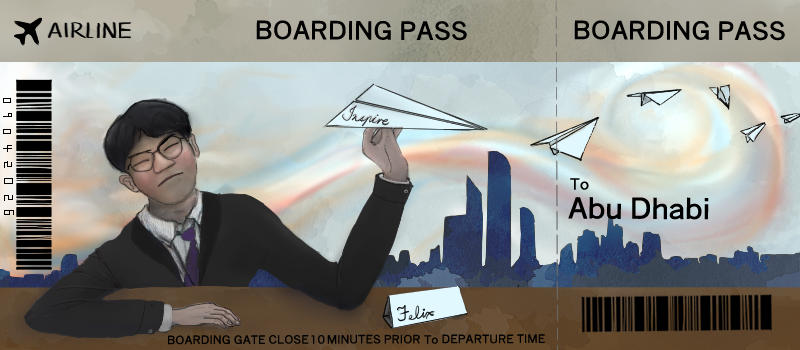
Artwork by William
Lin Jiaxin Felix, The Hong Kong Polytechnic University
Join Felix on his cross-border journey into the intimidating peaks and valleys of the Model United Nations.
Climbing the Diplomatic Ladder: My Journey from Anxious Novice to Inspired Leader
By LIN Jiaxin Felix
The Model United Nations (MUN) is often seen as the ground school from which future leaders may reach lofty heights. But will this four-day international conference truly unlock my potential? Join me on my emotionally turbulent first flight and see if the program is a fit for you!
Day 1: Preflight Jitters
It’s 1 o’clock in the morning as I sink into my window seat on board a jet that stirs to life on the tarmac at Chek Lap Kok International Airport. The engines roar in anticipation of takeoff. I’m about to embark on my first MUN adventure.
As the plane soars upwards en route to Abu Dhabi, leaving the towering skyscrapers of Hong Kong looking small and vulnerable, I wonder—am I about to gain fresh insights into my abilities and perhaps even soar like a 747, or embarrass myself by crashing out in front of hundreds of strangers?
MUN serves as an international platform that offers young students, known as delegates, the opportunity to explore diplomacy, international relations, and the workings of the United Nations. The current Secretary-General of the United Nations, António Guterres, has emphasised his commitment to “giving young people a much stronger voice in international affairs.” MUN is a space where students not only debate global issues but also unite in their quest for solutions.
While the Model United Nations is celebrated for its educational value, some have raised concerns about its growing commercialisation, noting that high participation fees and a competitive atmosphere can sometimes overshadow its original spirit of diplomacy and inclusion. Still, many educators and participants maintain that, when organised thoughtfully, MUN remains a powerful tool for personal and academic growth.
As this will be my MUN debut, I naturally hope everything unfolds smoothly. Yet, the thought of debating native English speakers sends ripples of apprehension through me. Adding to my anxiety is being assigned to represent Israel—a nation with a complex and sensitive political landscape.
Day 2: Silent Self-Doubt
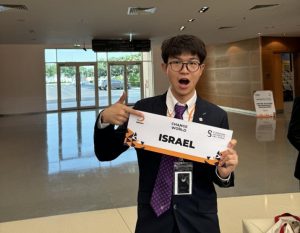
I slipped into my suit, tightened my tie, and entered the opening ceremony. The air buzzed with a symphony of languages and ideas, each delegate beaming with energy and confidence as if maestros in their own right. But I sat there, silent and still, like a marionette with its strings untethered; my mind was suddenly void of anything other than one question: Did I really belong here?
A voice pierced the chatter, bringing the room to a hush. “CWMUN is designed for those who want to be future leaders and change the world!” declared Claudio Corbino, the founder.
Well, I’m just an ordinary student, here to make friends and have fun. Future leader? Change the world? You must be joking!
Perhaps noticing my prolonged silence, the delegate next to me turned and asked how many times I had participated.
“First time,” I replied, and returned the question.
“Wow, enjoy your first journey! This is my seventh!” she exclaimed and then introduced herself.
I was stunned yet intrigued by the magic that had drawn Susan back seven times. During our chat, her confident smile and insightful perspective about developing more and more with each MUN participation answered my question. Sensing my nervousness, Susan offered comfort: “There’s nothing to be afraid of.”
She explained that, as the Official Guide puts it, the Model United Nations is all about learning. As delegates, we each get a country to research and write position papers for. Usually, the MUN begins with an opening ceremony, followed by the announcement of the topic. “Last year was Nuclear Weapons Proliferation and Disarmament—quite challenging!” Once the conference kicks off, everyone will add their countries to the speaker list, deciding the order of speakers. “Of course, you can also remain silent, but that would be super boring.” Throughout the event, we share views, propose solutions, and dive into debates. In the end, the resolution with the most votes wins!
Day 3: Confused and Sceptical
By the third day in Abu Dhabi, I found myself a bit perplexed. Yesterday, our topic, the United Nations Environment Programme (UNEP), was announced. It was straightforward to discuss. However, as delegates presented, I noticed a troubling indifference by some. While representatives from major countries like the USA, China, and Russia seemed fixated on their own proposals, delegates from smaller nations appeared to just follow the crowd. When a motion was proposed, countries either agreed or opposed without much thought. They merely based their stance on the diplomatic ties of the country they represented, or they agreed only because others did. There was a noticeable absence of deep thinking and genuine analysis of the motions themselves. If all delegates behave like this, what would be the meaning of MUN—or even the UN itself?
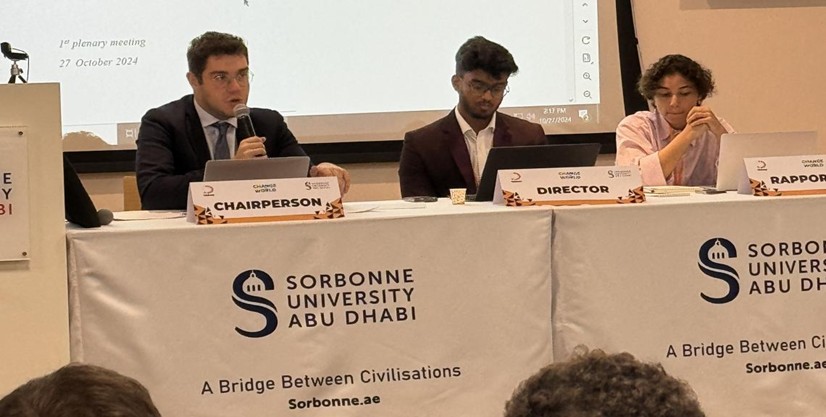
I posed this question to our chairperson and mentor, Mr Angelo Coroneo, who has been with Change the World MUN for over five years. To my surprise, Angelo valued my observation and critical thinking. He acknowledged that some delegates struggle to grasp the process and tend to follow the crowd. However, he pointed out that this mirrors the reality at the official UN. “Even in the real UN, most resolutions are still dominated by the world’s superpowers. Smaller or third-world countries have limited influence,” he explained. “MUN is not just an intriguing experience or a powerful addition to your resume. We hope this opportunity sparks deep reflection on international relations. Should you work for the UN in the future, you will have the ability to address these issues.”
Day 4: Reflective and Inspired
Ultimately, despite many countries’ reluctance to cooperate with Israel, we were invited to join the coalition of European countries due to shared interests, and successfully passed a proposal by majority vote, emerging victorious.
That evening, after saying my farewells and packing my bags, I asked myself if I had made the right choice to attend this MUN. Did this program really come close to reflecting the complexities of the real organisation? Was there an element of commercialisation about it?
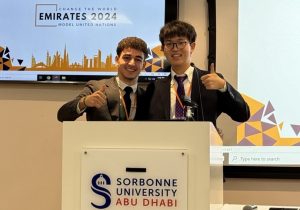
My answer was that it didn’t matter. It didn’t matter which country you were assigned, or how many times you had attended before, or with whom you had rubbed shoulders. It was about the skills you acquire. Thorough preparation is key. It’s the only way to make the right decisions at crucial moments and secure the greatest benefit for your nation. Every country has its own stance and interests. As delegates, we must respect and understand others while steadfastly defending our own national priorities.
As my homebound jet started its ascent to 30,000 feet, I looked back on how superficial my understanding of international affairs had been. The relationships between countries can’t be neatly categorised as simply “good” or “bad.” When I later shared this insight with friends, I was surprised to discover that, as university students in Hong Kong, none of us knew much about global issues, despite daily exposure to news from around the world. In a city as international as Hong Kong, having a global perspective is crucial. Without it, we risk missing out on cross-cultural communication opportunities and limiting our future growth and development.
There’s a well-known pun at MUN: “Why did the delegate bring a ladder to the conference? Because they wanted to reach new heights in diplomacy!” While I may not have climbed onto a grand stage or led a delegation to victory, MUN had handed me something far more valuable: my own ladder. Every rung—every speech, negotiation, and setback—had become a step upward, not toward applause, but toward self-discovery. In the end, perhaps the real summit is not about leading crowds, but about daring to ascend, step-by-step, toward the best version of ourselves.
And as I continue my climb, I realise that the more insightful view from here, shaped by perseverance and purpose, is already its own reward.
So, will you dare to grasp the next rung on your own diplomatic ladder? The first step might be the hardest, but the view is worth it!

About the Author
Lin Jiaxin is a PolyU sophomore majoring in Electrical Engineering who always loves to challenge himself and fill his spare time with diverse extracurricular activities, such as the EAGLE HUB, the Marine Advanced Technology Education Remotely Operated Vehicle (MATE ROV) competition, and the Model United Nations (MUN). Despite not always achieving satisfactory outcomes, he feels that the lessons learned and experience accumulated during the journey are much more significant than the prizes or rewards. Felix considers adaptability to be his greatest strength. This capability helps him rapidly adjust to diverse environments and avoid dwelling on past failures or negative emotions. Of course, sometimes Adele’s singing is also used as a secret sauce to elevate his mood.
Author’s Reflection
I’ve had the habit of recording interesting things in my life since I was a child, but unfortunately, the frequency has decreased as I have grown older. When I discovered that ELC2011 gave me enough freedom to write a feature article that could coincide with my participation in MUN, I realised that this was a great opportunity to pick up the habit of recording again.
I am sincerely grateful to my subject teacher and editor, Mr Todd, and my classmates for their encouragement and support during this writing process, which allowed me to think more deeply about the meaning and impact of MUN on participants. This experience made me genuinely understand the irreplaceable importance of recording in order to reflect on oneself, and also inspired me to continue writing.